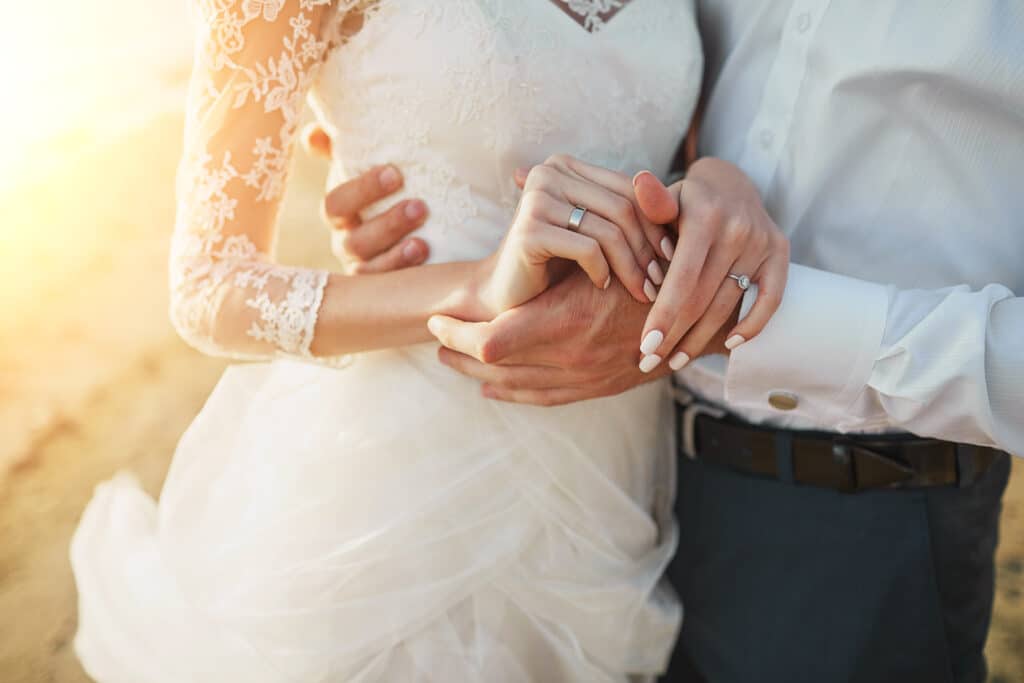
Wedding ceremonies have been happening for centuries, and no two look the same. I’ve had the joy of seeing some of my kids get married. Reciting vows is part of almost every ceremony, and writing personal ones has become popular in recent decades. Some estimates suggest up to 80 percent of couples opt to pen their own, sharing personal stories and great memories. Others stick with the traditional “I do” statements. No matter how you say them, those vows stir up special feelings.
Anyone who has gotten married has said a vow of some form. But do we really know why we have them or what they mean? The vow is not just a tiny moment of the wedding day. It is declaring that you are committing to someone. Those words should be deeply symbolic and meaningful to everyone in the room, especially the couple exchanging rings. The next time you attend a wedding, listen closely to what’s being announced at the altar. Here is what wedding vows actually mean.
1. “I, [Name], take you, [Spouse’s Name], to be my wedded [wife/husband].”
This vow tells your spouse that, in your heart, you really want this. They are not a “maybe.” They are your “definitely.” This vow has signed you up for a lifetime of partnership, service, and friendship. It wasn’t brought about by coercion or force. This likely feels deeply comforting to your spouse. They feel chosen, wanted, and desired. If the dating or courting process stirred up devotion, this vow during a wedding cemented it.
Try this: Even if you’ve been married for five, fifteen, or more years, thinking back on those early days together can rekindle those feelings of first love. Surprise your spouse one evening this week by sharing the story of the moment you realized you wanted to marry them.
2. “To have and to hold from this day forward.”
Weddings are the start of a brand-new life. The single life has ended. The living-for-yourself is over. You have united with another person, leaving your respective families, and becoming one. This vow showed everyone that the old “you” was gone and the new “us” has started. Many couples light unity candles at weddings to signify this change. The vow verbalizes what the candle displays. Once you’ve said this vow, you and your spouse have committed. You belong together from this moment on.
Try this: In strong marriages, both spouses know they are loved and valued, day after day, year after year. Let your spouse know today that you still love them and are grateful to have them.
3. “For better, for worse, for richer, for poorer, in sickness and in health.”
C.S. Lewis married Joy Davidman in the hospital, knowing they wouldn’t have much time together. She passed away shortly after their vows, but Lewis stepped into marriage with this knowledge anyway. Most of us hope “hard days” are further down the road. But whether your spouse gets sick, loses their job, or forgets to pay a parking ticket, difficulties inevitably arise. That’s why this vow is vital. It says that no matter what happens, you won’t leave your spouse to fight battles alone. You’ll stay by their side and support them through all hardships, big or small. For better or worse, this vow means you’ve chosen to give your spouse unwavering support for the rest of their life.
Try this: This week, make a mental list of all the hard things you’ve overcome in your marriage and thank your spouse for being by your side through it all.
4. “To love and to cherish.”
Love, as I’ve written before, is not just a feeling. It’s a decision to put someone else above yourself. “I love you” expresses feelings and commitment. But “I cherish you” expresses how precious we think they are. When you vowed to cherish your spouse, you promised to look for opportunities to notice, appreciate, honor, serve, and protect them forever. To cherish someone is to understand that life without them wouldn’t be as joyful. That’s a powerful thing to say to someone, whether it’s your wedding day or your golden anniversary.
Try this: Do something a little out of the ordinary for your spouse this week. Be the one who picks up ice cream at the grocery store and surprises the other after the kids have gone to bed. Tell your spouse that you cherish the time you get to spend with them.
5. “Till death do us part.”
This line signifies a lifelong commitment, with death being the only factor that can dissolve the marriage. This is probably the hardest one for modern couples to say because it is permanent, but that’s the point. Marriage is a daily commitment that adds up to a lifetime together. If you’ve said this vow, you know that you have to work on your marriage each day to keep it strong. To better enjoy your married life and the years ahead, it’s essential to make time for each other, to truly listen to what’s on each other’s minds, and to have fun with each other. Ecclesiastes 5:4–5 says, “When you make a vow to God, do not delay in fulfilling it… It is better not to make a vow than to make one and not fulfill it.” Make the effort each day to act with love in word and deed so that the years you have ahead are good ones.
Try this: Reflect on what’s worked well in your marriage—are you good communicators? Do you forgive easily? Then discuss what you both can work on a little more and commit to working on it over the next few weeks.
Sound off: How did you choose between traditional wedding vows and writing your own? Share in a comment.